PRODUCT PAGE / YZEFY SPROCKETS
Type B and Type C hub sprockets
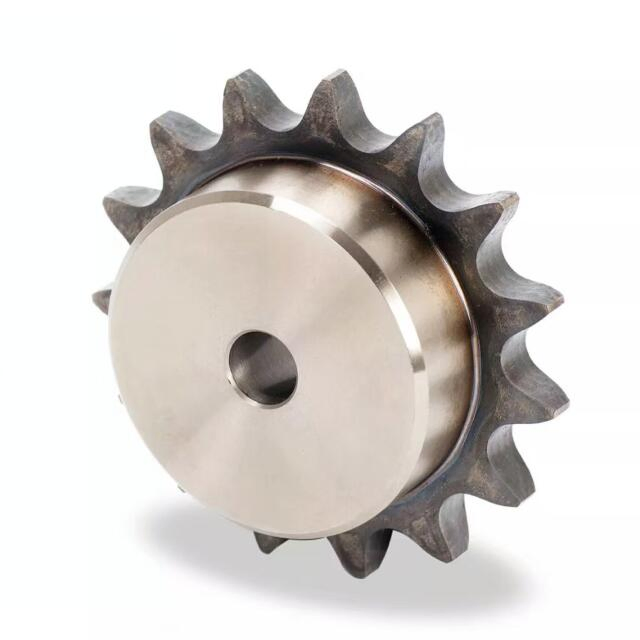
Type B and Type C hub sprockets combine the toothed plate with an integral hub. In common roller chain catalogue terminology, a Type B sprocket has a hub on one side, while a Type C sprocket has a hub extending on both sides or a longer double-sided hub. Definitions and dimensions can vary by standard, so the selected chain series and drawing remain the controlling reference.
Product introduction
YZEFY Sprockets manufactures hub sprockets for roller chain drives, conveyors, OEM machinery and replacement applications. A sprocket with hub can simplify shaft mounting, provide space for a keyway or bushing, and keep the chain line at the required position. We review hub length, bore, keyway and clearance with the shaft design before production.
Main uses
- Type B hub sprockets for common shaft-mounted chain drives
- Type C hub sprockets where a longer or double-sided hub is required
- Finished bore and keyed sprocket replacements
- Conveyor and agricultural equipment with defined shaft interfaces
- OEM assemblies requiring a custom hub length or locking detail
Suitable industries
Packaging, material handling, agricultural machinery, woodworking, food processing, mining and general industrial equipment use B hub sprockets and C hub sprockets. The hub style should be selected with the chain line, shaft support, guard clearance and torque transmission in mind.
Core advantages
- Integral hub construction for direct shaft mounting when the design allows
- Bore, keyway and hub length matched to the machine interface
- Options for pilot bore, finished bore, taper lock or QD arrangements
- Custom production from drawings, samples or replacement dimensions
Product features
- Materials: C45 and 40Cr alloy steel are common choices for hub sprockets. Stainless steel, cast iron, aluminum and engineering plastics can be reviewed when the load, corrosion exposure and speed permit.
- Machining: CNC turning and bore machining can be combined with tooth cutting, keyway machining, hub facing and deburring. A bushing or locking interface is produced to the agreed dimensions.
- Dimensional accuracy: Inspection covers tooth pitch, tooth profile, bore, keyway, hub length, shoulder dimensions, concentricity and runout. The final tolerance is tied to the drawing or chain standard.
- Surface treatment: Induction hardening, carburizing or a specified protective finish can be used when the application calls for additional wear or corrosion control.
- Standards: ANSI, DIN, ISO, BS and JIS references can be used for the roller chain engagement. Confirm the chain series before selecting a hub sprocket.
- Custom capability: We can modify tooth count, bore, keyway, hub length, shoulder, mounting method, material and heat treatment for custom sprocket work.
Applications
- Conveyor systems: Hub sprockets for drive shafts, return shafts and replacement stations
- Packaging machinery: Keyed hub sprockets for compact power transmission
- Agricultural equipment: Hub sprockets exposed to dust, impact and variable loads
- Food processing equipment: Stainless steel or protected hub components where the environment requires it
- OEM machinery: Custom sprocket with hub dimensions integrated into a new machine design
- MRO replacement: Finished bore sprockets that match an existing shaft, keyway and chain line
Selection guide
- Confirm the chain standard and pitch. Identify ANSI, DIN, ISO, BS or JIS reference, chain series, strand count and roller dimensions.
- Choose the hub arrangement. Decide whether a one-sided Type B or extended/double-sided Type C hub gives the required shaft support and chain line.
- Measure the shaft interface. Provide shaft diameter, keyway width and depth, shoulder position, locking method and usable hub length.
- Check the surrounding space. Confirm clearance to guards, bearings, chain guides, shaft steps and adjacent sprockets.
- Review service conditions. Give speed, load, shock, dust, moisture, temperature and operating hours for material and treatment selection.
Why choose YZEFY Sprockets
- Manufacturing capability: Our process can cover hub turning, tooth cutting, keyway machining, heat treatment and dimensional inspection for B and C hub sprockets.
- Custom engineering support: We check the hub and shaft interface together with the chain engagement, which reduces the risk of a sprocket that fits the chain but not the machine.
- Quality control: Bore, keyway, hub length, tooth pitch, concentricity and runout can be inspected against the agreed drawing.
- Export experience: We support quotation review, production coordination, packing and export documentation for standard and custom hub sprocket orders.
FAQ
What is the difference between a Type B and Type C sprocket?
In common catalogue terminology, Type B usually has a hub on one side and Type C has a longer or double-sided hub. The exact dimensions vary by standard and supplier, so the hub drawing and shaft interface should be confirmed.
Can you supply a finished bore sprocket with a keyway?
Yes. Provide the shaft diameter, keyway dimensions, bore tolerance and hub length. A pilot bore can also be supplied when final machining will be completed during assembly.
Is a hub sprocket stronger than a plate sprocket?
The hub changes the mounting arrangement and load path, but strength depends on material, geometry, bore, hub length, load and alignment. The two types should be compared for the complete application rather than by name alone.
Can Type B or Type C sprockets use taper lock or QD bushings?
Some hub designs can be made for taper lock or QD arrangements. The bushing series, shaft diameter, keyway and available clearance must be checked before quoting.
Can you match a worn sprocket with hub?
Yes. Send the chain marking, tooth count, shaft and keyway dimensions, hub length and photos or a sample. Wear can change the original dimensions, so the chain and mating sprocket should also be checked.
What should an OEM drawing include?
The drawing should show chain standard, pitch, teeth, bore, keyway, hub dimensions, tolerances, material, heat treatment, surface finish and any inspection requirements. A revision number is useful for repeat orders.
Request a quote
Send the chain designation, teeth, bore, keyway, hub style, hub length, material, quantity and application. If the part is a replacement, add shaft measurements and photos. Use Request a Quote or Send Your Drawing.