
PRODUCT PAGE / YZEFY SPROCKETS
Type A plate sprockets
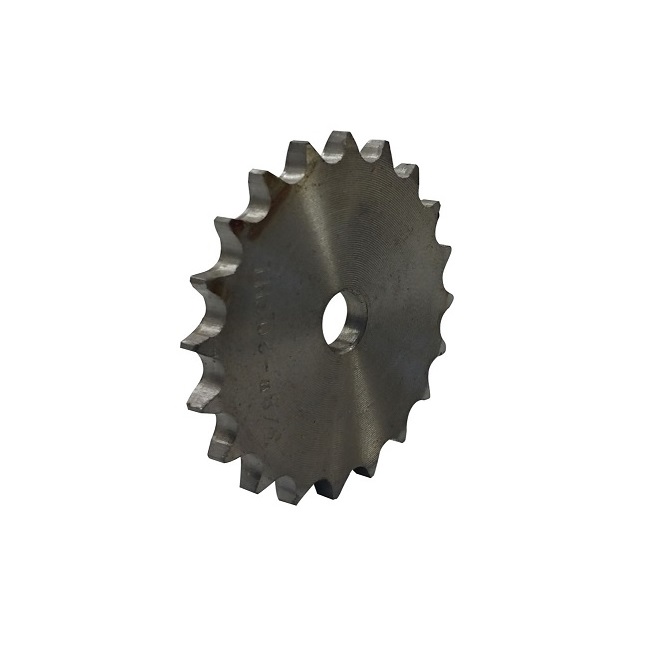
Type A plate sprockets are flat sprocket discs without an integral hub. They are used when the machine has a separate hub, carrier or mounting arrangement, or when the sprocket needs to fit into a compact chain drive. The plate form leaves the bore and mounting method open to the equipment design.
Product introduction
YZEFY Sprockets manufactures Type A sprockets for standard roller chain drives and custom equipment. We can produce a plain, pilot or finished bore, with the tooth count, pitch and plate dimensions matched to the specified chain. If the sprocket will be bolted, welded or fitted to a separate hub, provide that interface information with the inquiry.
Main uses
- Plate sprockets for compact roller chain transmissions
- Replacement sprocket discs where a separate hub is reused
- Bolt-on or weld-on chain sprocket assemblies
- Agricultural, conveyor and packaging machinery
- OEM machine designs that require a custom plate thickness or mounting pattern
Suitable industries
Type A plate sprockets are used in packaging, agricultural equipment, material handling, woodworking, food processing and general industrial machinery. They are also useful for maintenance buyers who need to replace the toothed plate while retaining an existing hub or carrier.
Core advantages
- A flat profile for applications with limited axial space
- Bore, plate thickness and mounting details can follow the machine design
- Available as a standard chain sprocket or a drawing-based replacement
- Can be matched to a separate hub, shaft or fabricated assembly
Product features
- Materials: C45 and 40Cr alloy steel are common options for industrial plate sprockets. Stainless steel, cast iron, aluminum, nylon or acetal can be reviewed for specific load and environmental requirements.
- Machining: Tooth cutting, turning, bore machining, keyway work and deburring can be arranged according to the product design. Mounting holes or slots are added only when they are defined in the drawing.
- Dimensional accuracy: The inspection focus includes pitch, tooth form, tooth count, bore, plate thickness, mounting pattern, concentricity and runout. Tolerances are confirmed against the selected chain standard or drawing.
- Surface treatment: Induction hardening, carburizing or a specified protective finish can be considered when the teeth face wear, impact or corrosion exposure.
- Standards: ANSI, DIN, ISO, BS and JIS roller chain references can be used for the tooth and pitch requirements. Confirm the exact chain designation before ordering.
- Custom capability: We can adjust tooth count, plate thickness, bore, keyway, bolt pattern, material and surface treatment for an OEM or replacement part.
Applications
- Conveyor systems: Plate sprockets used with separate hubs or fabricated drive components
- Packaging machinery: Compact roller chain drives with limited axial clearance
- Agricultural equipment: Replacement plates for planters, harvesters and other chain-driven mechanisms
- Food processing equipment: Stainless steel or protected plate components where washdown or corrosion matters
- OEM machinery: Custom Type A sprockets designed into a new machine assembly
- Maintenance projects: Replacement of a worn plate while retaining a serviceable hub or shaft interface
Selection guide
- Identify the chain. Confirm ANSI, DIN, ISO, BS or JIS reference, chain series, pitch and strand count. A Type A sprocket is not defined by the plate shape alone.
- Check the separate interface. Provide the shaft diameter, existing hub dimensions, bolt circle, weld area or carrier details. This determines the bore and mounting pattern.
- Set the tooth count. Confirm the driver and driven teeth, speed ratio, chain wrap and center distance before choosing the sprocket diameter.
- Review the plate geometry. Check plate thickness, outside diameter, axial clearance and any nearby guards, bearings or chain guides.
- Describe the service. Include load, speed, dust, moisture, impact, temperature and operating hours. These details help determine material and treatment.
Why choose YZEFY Sprockets
- Manufacturing capability: Our production route can include CNC turning, tooth cutting, bore and keyway machining, heat treatment and final inspection for Type A plate sprockets.
- Custom engineering support: We review the sprocket together with the separate hub or carrier so the plate is not quoted as an isolated part without checking the assembly.
- Quality control: Tooth pitch, tooth profile, bore, plate thickness, runout and mounting dimensions can be inspected against the agreed specification.
- Export experience: We coordinate drawing confirmation, quantity, packing and shipping information for replacement and OEM plate sprocket orders.
FAQ
What is a Type A sprocket?
A Type A sprocket is a flat plate sprocket without an integral hub. It is often used with a separate hub, carrier or fabricated mounting arrangement. The exact design still depends on the chain standard and machine interface.
Can a Type A plate sprocket be installed directly on a shaft?
It can be installed directly only when the plate, bore and locking arrangement are designed for that shaft. Many applications use a separate hub or carrier. Send the shaft and mounting details so the interface can be reviewed.
Do you supply pilot bore and finished bore plate sprockets?
Yes. Pilot bore, plain bore and finished bore options can be specified. A finished bore request should include shaft diameter, keyway size, tolerance and the required locking method.
Can you make a custom a plate sprocket from a drawing?
Yes. Custom tooth counts, plate thicknesses, bores, keyways, bolt circles and materials can be reviewed from a drawing or sample. The chain designation is needed to confirm the tooth profile.
How do I choose the plate thickness?
Plate thickness depends on chain width, load, alignment, mounting method and available space. It should be checked with the hub or carrier and not selected from tooth count alone.
Are Type A sprockets suitable for replacement work?
They are suitable when the replacement plate matches the chain and the existing hub or mounting arrangement. A worn part, dimensioned drawing or clear photo helps confirm the replacement.
Request a quote
Send the chain size, teeth, bore, plate thickness, mounting pattern, material, quantity and application. For replacement work, include the existing hub or shaft dimensions. Use Request a Quote or Send Your Drawing for a technical review.