PRODUCT PAGE / YZEFY SPROCKETS
Idler and tensioner sprockets
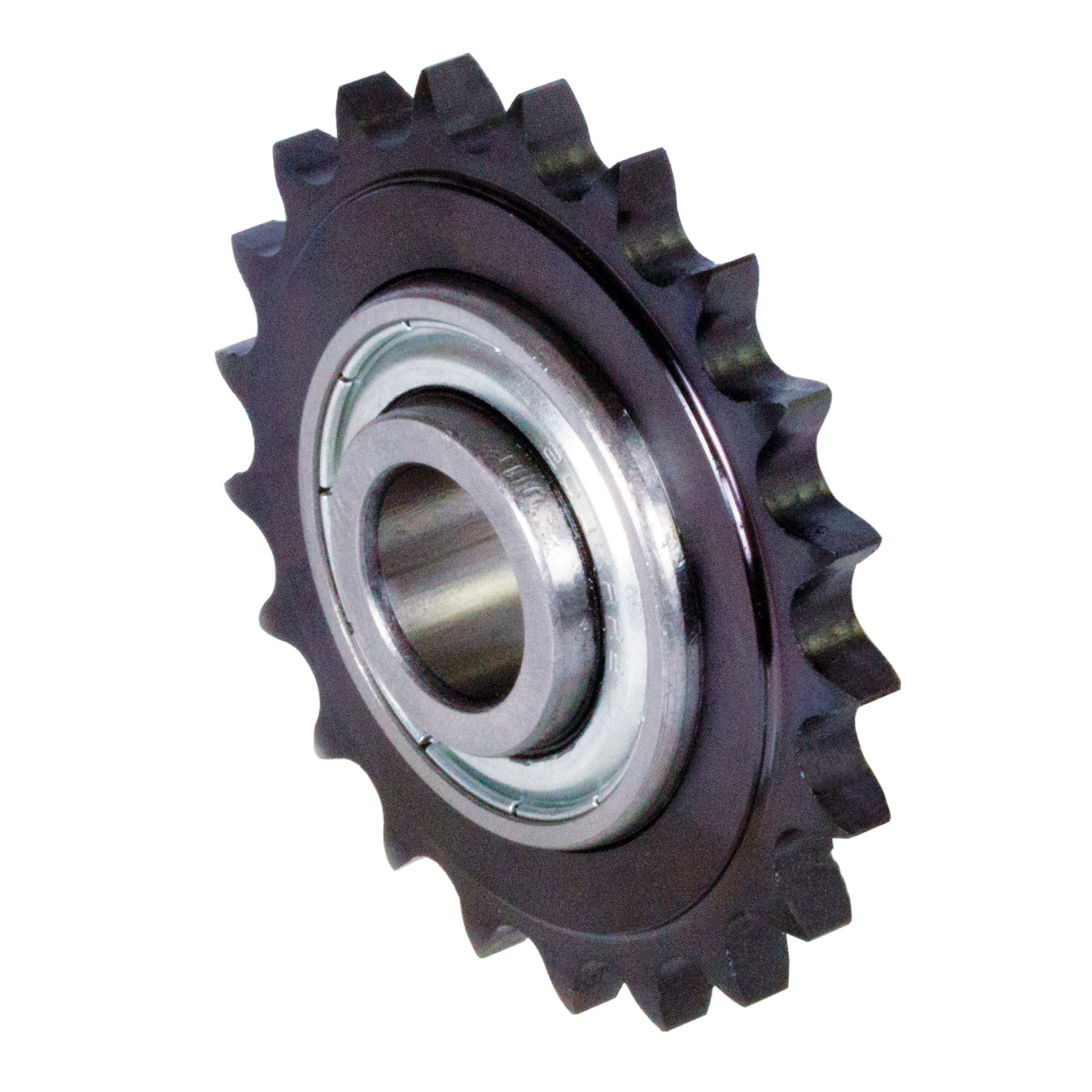
An idler sprocket guides a chain, changes its path or supports a return run. A tensioner sprocket is used in a tensioning arrangement to control slack and maintain chain engagement. These sprockets usually do not drive the chain, but they still need the correct pitch, tooth profile, alignment and mounting support.
Product introduction
YZEFY Sprockets manufactures idler chain sprockets and tensioner sprockets for industrial drives, conveyors, agricultural equipment and OEM machinery. We can supply a pilot or finished bore, a bearing-related interface, an integral hub or a custom mounting arrangement. The required chain movement and tensioner geometry should be included in the inquiry.
Main uses
- Roller chain idler sprockets for return runs and chain guidance
- Chain tensioner sprockets for slack control
- Fixed idlers, spring-loaded tensioners and adjustable maintenance assemblies
- Replacement idler sprockets in conveyors and agricultural machinery
- Custom guide sprockets for OEM chain systems
Suitable industries
Packaging, material handling, agricultural equipment, woodworking, food processing and general OEM machinery use idler and tensioner sprockets. The correct position depends on chain span, wrap, tension, speed and available adjustment space.
Core advantages
- Tooth geometry matched to the actual chain rather than a generic roller diameter
- Mounting options for shaft, bolt, bearing or tensioner arm arrangements
- Materials and surface treatments reviewed for the return path and environment
- Custom replacement support when the original idler is no longer available
Product features
- Materials: C45 and 40Cr alloy steel are common options. Stainless steel, cast iron, aluminum, nylon or acetal can be considered for corrosion, weight, noise or product-contact requirements.
- Machining: Tooth cutting, bore machining, hub work, bearing seat or mounting interface machining, keyway work and deburring can be arranged to the design.
- Dimensional accuracy: Inspection focuses on chain pitch, tooth profile, bore or bearing seat, mounting face, concentricity and runout. Tensioner alignment is checked from the drawing.
- Surface treatment: Induction hardening, carburizing or specified protective finishes can be considered where the idler teeth face wear or corrosion.
- Standards: ANSI, DIN, ISO, BS and JIS chain references can be used. State the chain series and strand count before selecting an idler.
- Custom capability: Tooth count, bore, bearing seat, hub, mounting hole, offset, arm interface, material and treatment can be customized.
Applications
- Conveyor systems: Return-run idlers and tensioner sprockets for chain guidance
- Packaging machinery: Compact chain tensioners around intermittent drive sections
- Agricultural equipment: Idlers exposed to dust, vibration and changing chain loads
- Food processing equipment: Stainless steel or protected idlers where washdown matters
- OEM machinery: Custom idler sprockets integrated into a tensioner or guide assembly
- Maintenance projects: Replacement idlers for worn return paths and chain tensioning systems
Selection guide
- Identify the chain. Confirm standard, series, pitch, roller dimensions and strand count.
- Define the function. State whether the sprocket is a fixed idler, return guide, tensioner or adjustable chain support.
- Check the movement. Provide chain speed, slack amount, wrap, direction changes and the desired tensioner travel.
- Confirm the mount. Measure shaft, bearing, bolt, keyway, arm interface and available offset dimensions.
- Check clearance. Review guards, chain guides, adjacent sprockets, frame members and the full adjustment range.
- Review the environment. Note dust, moisture, washdown, corrosion, temperature and lubrication conditions.
Why choose YZEFY Sprockets
- Manufacturing capability: Our workflow can include tooth cutting, bore or bearing interface machining, hub work, heat treatment and dimensional inspection.
- Custom engineering support: We review the idler or tensioner geometry with the chain path, mounting support and adjustment range.
- Quality control: Tooth pitch, profile, bore or bearing seat, face position, concentricity and runout can be checked to the agreed specification.
- Export experience: We coordinate replacement identification, assembly details, packing and export documents for idler and tensioner projects.
FAQ
What is an idler sprocket?
An idler sprocket guides or supports a chain and normally is not connected to the main power source. It still requires the correct chain pitch, tooth form, face width and alignment.
What is the difference between an idler and a tensioner sprocket?
An idler guides the chain or supports a return run. A tensioner sprocket is part of an arrangement that adjusts or maintains chain tension. One product may serve both roles when the mounting design allows it.
Should an idler sprocket use a bearing?
That depends on the shaft, speed, radial load, adjustment method and maintenance design. Provide the bearing or shaft information if a bearing-mounted idler is required.
Can you supply a stainless steel idler sprocket?
Stainless steel can be reviewed for corrosion or washdown conditions. The grade and tooth design still need to suit the chain load, speed and wear requirements.
How do I choose the teeth for a tensioner sprocket?
Confirm chain series, available space, chain wrap, slack, speed and the tensioner travel. A suitable tooth count helps the chain engage correctly without forcing a sharp path change.
Can you replace an idler from photos?
Photos can start the review, but chain marking, tooth count, bore or bearing dimensions, face width and mounting details are needed before production.
Request a quote
Send the chain size, teeth, bore or bearing details, hub, mounting arrangement, material, quantity and application. Include a sketch of the chain path or tensioner arm when possible. Use Request a Quote or Send Your Drawing.