PRODUCT PAGE / YZEFY SPROCKETS
Split sprockets
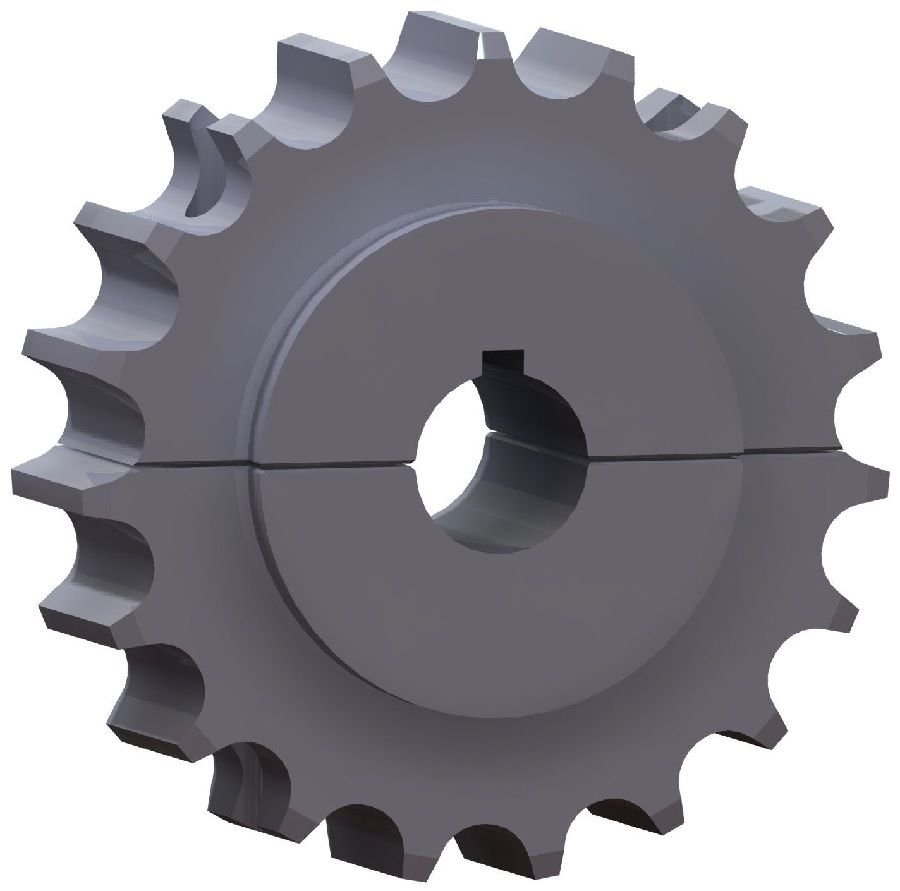
Split sprockets are made in sections that can be assembled around an existing shaft or within a machine frame. This arrangement can reduce the need to remove a shaft, bearing or other connected equipment during a replacement, subject to the actual split and mounting design. The joint, fasteners, bore and alignment must be engineered as part of the complete sprocket.
Product introduction
YZEFY Sprockets manufactures split roller chain sprockets for conveyors, agricultural equipment, material handling systems and OEM machinery. We can review two-piece or other split arrangements, with custom bore, keyway, bolt pattern, hub and material requirements. A drawing of the shaft and the available installation space is important.
Main uses
- Split sprockets for maintenance access around installed shafts
- Large diameter sprockets that are difficult to remove as a solid part
- Conveyor and bucket elevator replacement sprockets
- Agricultural and industrial chain drive repairs
- Custom split sprocket assemblies for OEM equipment
Suitable industries
Conveying, agriculture, material handling, woodworking, packaging and general industrial maintenance use split sprockets. They are useful when downtime, shaft removal or access through the machine frame makes a solid replacement impractical.
Core advantages
- Installation around an existing shaft when the design permits
- Fastener and split-line details matched to the shaft and chain line
- Materials and treatments selected for the chain load and environment
- Custom production from a drawing, worn part or field measurements
Product features
- Materials: C45 and 40Cr alloy steel are common options. Stainless steel, cast iron, aluminum or engineering plastics can be reviewed for other service conditions.
- Machining: Tooth cutting, section machining, bore and keyway work, bolt holes, locating features and deburring can be arranged for the split design.
- Dimensional accuracy: Inspection includes tooth pitch, tooth profile, section fit, bore, keyway, bolt pattern, concentricity and runout after assembly.
- Surface treatment: Induction hardening, carburizing or specified protective finishes can be considered. The split joint and fasteners must remain compatible with the treatment plan.
- Standards: ANSI, DIN, ISO, BS and JIS chain references can be used for tooth engagement. The shaft and split arrangement are defined by the drawing.
- Custom capability: Section count, split line, bore, keyway, bolt pattern, hub, material, treatment and assembly details can be customized.
Applications
- Conveyor systems: Replacement of drive or return sprockets without removing a shaft where the design permits
- Packaging machinery: Serviceable sprockets in compact machine frames
- Agricultural equipment: Repair parts for dusty or seasonal chain drives
- Bucket elevators: Split sprockets for access around installed shafts
- OEM machinery: Custom split assemblies specified around a fixed frame
- MRO projects: Large or difficult-to-access sprockets requiring a controlled replacement plan
Selection guide
- Confirm the chain. Provide standard, series, pitch, roller dimensions, strand count and tooth count.
- Measure the shaft. Record shaft diameter, keyway, shoulder, bearing position and any shaft step that affects assembly.
- Define the installation route. Explain whether the sprocket must pass around the shaft, fit between frame members or clear a bearing and guard.
- Set the split arrangement. Confirm number of sections, split line, locating features, bolts, dowels and the available tool access.
- Check chain line and alignment. Give the face position and adjacent component locations so the assembled sprocket runs in the correct plane.
- Review the service. Include load, speed, impact, dust, moisture, corrosion and maintenance conditions.
Why choose YZEFY Sprockets
- Manufacturing capability: Our process can include section machining, tooth cutting, bore and keyway work, assembly inspection, heat treatment and final dimensional checks.
- Custom engineering support: We review the installation constraint and the assembled sprocket, not only the individual sections.
- Quality control: Section fit, assembled bore, bolt pattern, tooth profile, concentricity and runout can be inspected to the agreed drawing.
- Export experience: We coordinate part identification, fastener scope, packing and shipping information for replacement and OEM split sprockets.
FAQ
Why use a split sprocket instead of a solid sprocket?
A split design can allow installation around an existing shaft or inside a restricted frame, which may reduce disassembly. It is suitable only when the split, fasteners and alignment are designed for the load.
Are split sprockets supplied as two halves?
The number of sections is defined by the drawing and application. State whether a two-piece or another split arrangement is required, and whether bolts, dowels or other hardware should be included.
Can a split sprocket use an existing keyway?
It can when the shaft and split line allow the keyway to be assembled correctly. Provide shaft, keyway and section orientation details before production.
Can you make split roller chain sprockets in large diameters?
Large diameter designs can be reviewed from the chain, tooth count, shaft and installation dimensions. Diameter alone does not determine whether a split arrangement is suitable.
How do you check a split sprocket for alignment?
The assembled sections are checked for bore, joint fit, tooth alignment, concentricity and runout against the agreed drawing. The installation should also verify shaft and chain alignment.
Can you replace a split sprocket from photos?
Photos can start the review, but chain marking, teeth, shaft diameter, keyway, section dimensions, bolt pattern and available access are needed for a reliable quotation.
Request a quote
Send the chain size, teeth, shaft diameter, keyway, split arrangement, bore, hub, bolt pattern, material, quantity and application. Add photos of the installed sprocket and surrounding clearance. Use Request a Quote or Send Your Drawing.